Psychology
Pedophilic Tendencies: Neurobiological and Psychiatric Foundations in Forensic and Clinical Practice
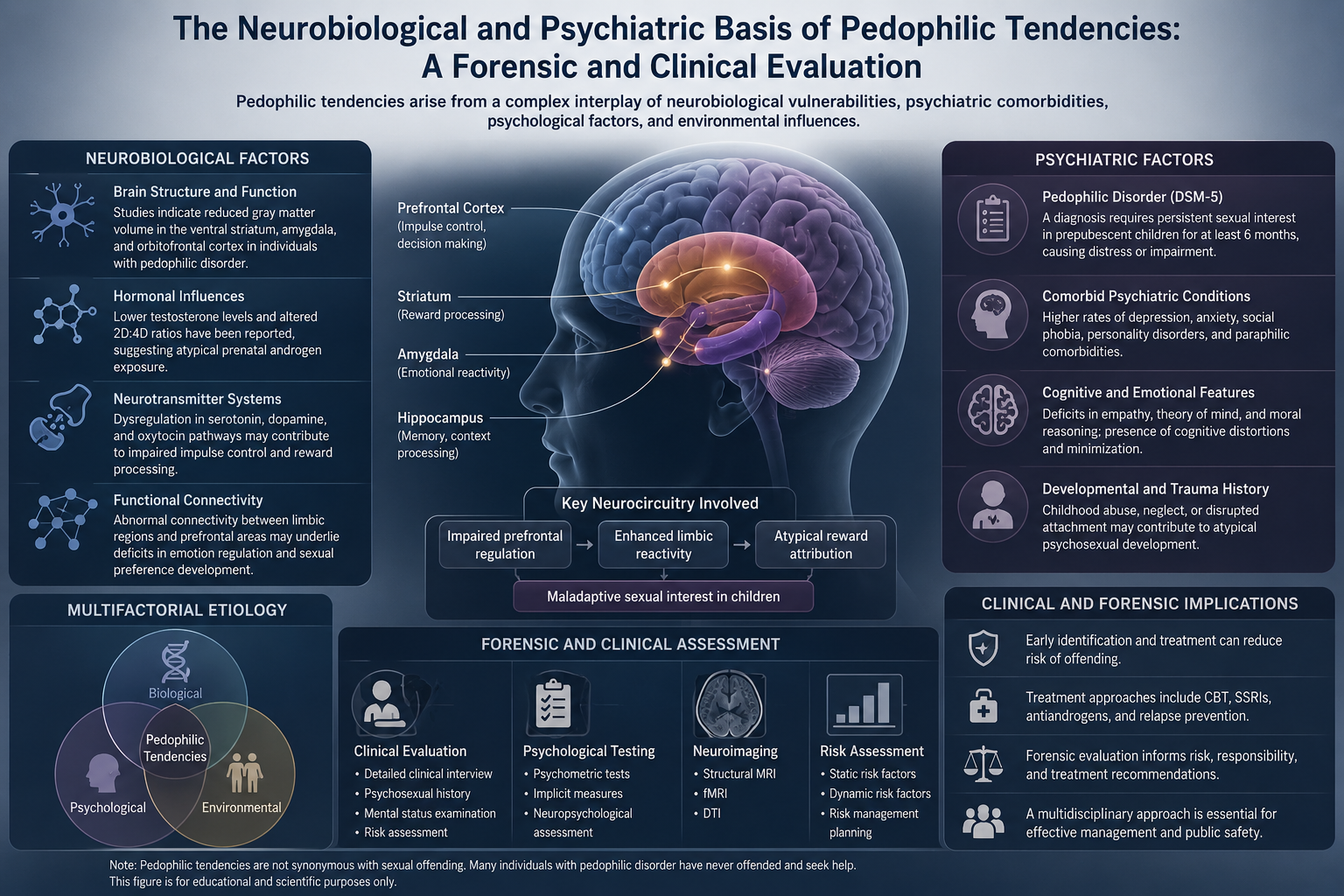
This article examines the neurobiological, psychiatric, and developmental factors associated with pedophilic tendencies from both clinical and forensic perspectives. It discusses brain structure and function, impulse control, reward processing, psychiatric comorbidities, cognitive patterns, risk assessment, and evidence-based treatment approaches. The review emphasizes that pedophilic disorder and sexual offending are not synonymous and highlights the importance of individualized, ethical, and multidisciplinary evaluation.