By nature, anxiety disorders are intense mental and emotional processes that occur within an individual’s inner world. Often, while a person is experiencing an internal storm, they may appear completely calm from the outside. In particular, individuals experiencing “high-functioning anxiety” may have mastered the art of maintaining their professional and social lives without projecting any issues outward.
However, the autonomic nervous system chronically remaining in a “fight or flight” (hyperarousal) state leads to involuntary physiological responses and specific behavioral patterns. Although it is not possible to make a clinical diagnosis through observation alone, certain clues can indicate that a person is under intense anxiety.
1. Body Language and Motor Activity
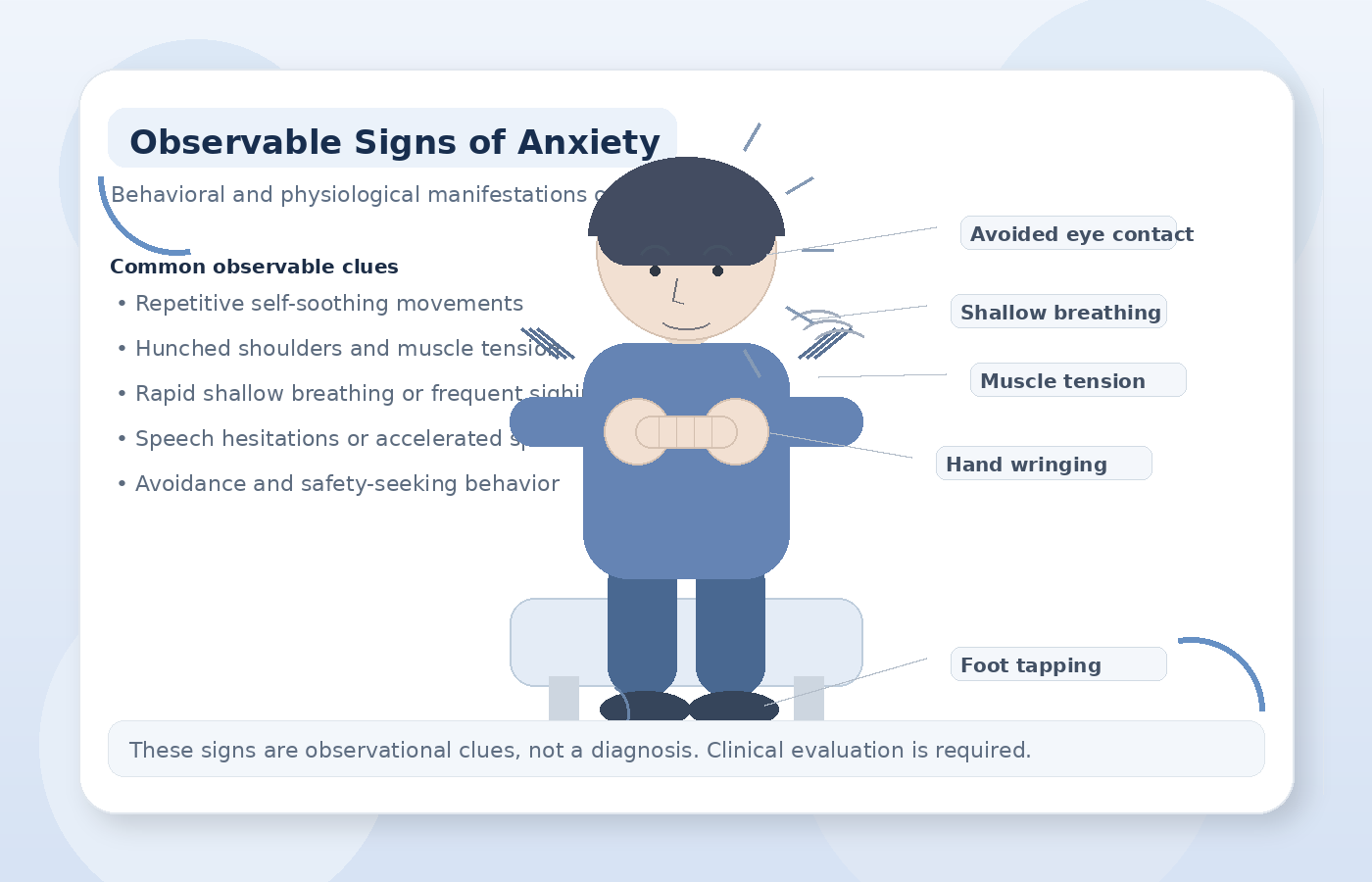
Anxiety creates pent-up, unreleased energy in the body. This is typically manifested outwardly as rhythmic, repetitive movements aimed at self-soothing:
- Motor Tension: Involuntary actions such as constant foot or leg tapping, hand wringing, finger drumming on a desk, or nail and lip biting are the most common physical discharge methods.
- Muscle Rigidity: A highly anxious body maintains high muscle tone. Shoulders consistently hunched toward the neck, clenched fists, or visible tension in the neck area are silent indicators of chronic anxiety.
- Breathing and Facial Expressions: Taking rapid and shallow chest breaths, frequently feeling the need to sigh deeply, and displaying a vague expression of worry or a “blankness” on the face can be highly noticeable.
2. Communication and Social Interaction Dynamics
An anxious mind constantly scans social environments for potential threats or the possibility of negative evaluation. This directly affects communication:
- Eye Contact Anomalies: Individuals with social anxiety, in particular, tend to avoid direct eye contact, which they find threatening. Alternatively, they may establish a hypervigilant and piercing gaze to analyze the other person’s facial expressions for signs of “danger or approval.”
- Speech Tempo and Content: Speaking very rapidly as if trying to catch up with the pace of racing thoughts, slurring words, or, conversely, struggling to string sentences together and hesitating out of fear of making mistakes are common occurrences.
- Excessive Need for Validation: Due to a lack of confidence in their own thoughts and actions, there is a prominent tendency to frequently seek reassurance in communication and to apologize constantly and unnecessarily.
3. Avoidance and “Safety-Seeking” Behaviors
Anxiety programs a person to stay away from stimuli that trigger distress. The most clearly observable picture from the outside is these avoidance strategies:
- Spatial Positioning: The need to always prefer sitting or standing near exit doors in crowded or enclosed spaces, and positioning oneself in the corners or along the walls rather than in the center of the room.
- Objects as a Social Shield: Resorting to distracting actions such as pretending to be engaged with a mobile phone, constantly drinking something, or fidgeting with clothing (e.g., a jacket zipper) to tolerate the stress created by uncertainty in the environment.
- Resistance to Routine Changes: Feeling intense discomfort toward unstructured, spontaneous plans and often canceling social events with last-minute excuses.